Foot Locker gets hundreds of applicants every time a position opens. Retail hiring looks simple on the surface. It rarely is.
The application process has four distinct stages, and most people stumble at stage one. Knowing what to expect at each step changes everything.


If you love sneakers, streetwear, or just want a retail job that doesn’t feel soul-draining, this is worth reading carefully. The culture at Foot Locker is real, and so are the gaps between what the job posting says and what actually gets you hired.
What the Foot Locker Hiring Process Actually Looks Like
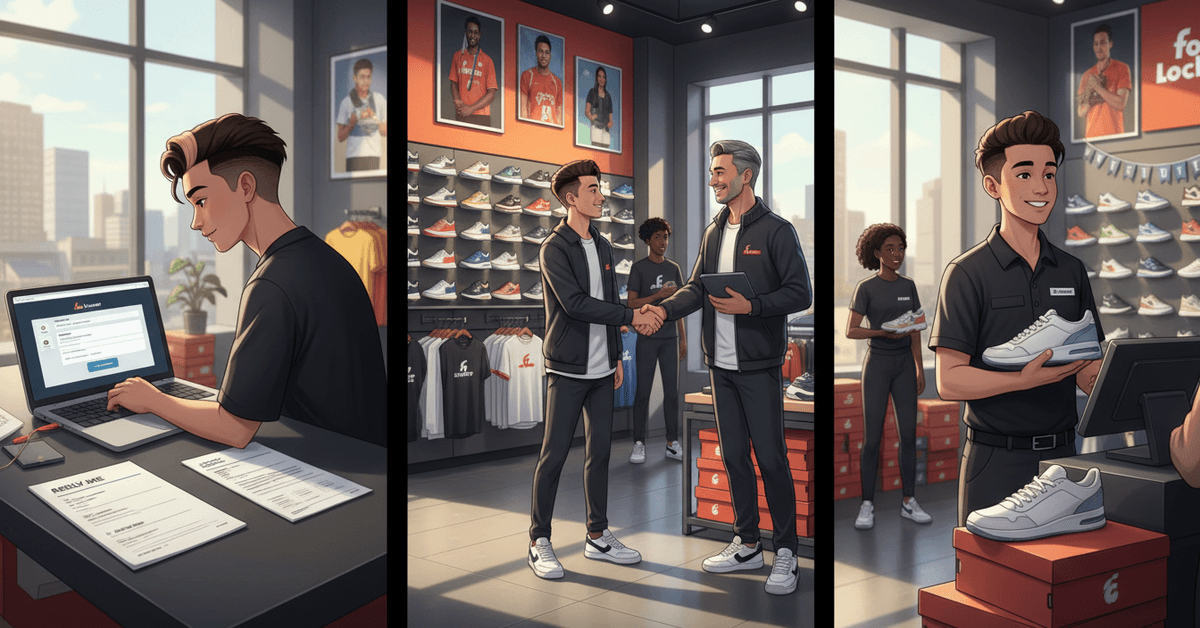
Step 1: The Online Application
Everything starts at Foot Locker’s careers page. Create an account, pick your location and role, upload your resume. That part is straightforward.
What trips people up is the optional cover letter. Most skip it because it says optional. I think that’s a mistake, especially for entry-level roles where your resume looks identical to 40 other applicants.
A two-paragraph cover letter that mentions one specific Foot Locker product drop or collaboration tells a hiring manager you actually pay attention to the brand.
Step 2: The Pre-Screening Assessment
Some roles include an online assessment before you ever speak to anyone. It tests customer service reasoning and situational judgment. Think scenarios like: “A customer is upset about a product. What do you do?”
There are no trick answers. The assessment wants to see that you default to helping the customer, not defending the store. Answer with that lens and you will move forward.
Step 3: In-Person Interviews
Foot Locker typically runs one or two in-store interviews. A store manager or assistant manager conducts them. Questions cover teamwork, reliability, and real retail situations.
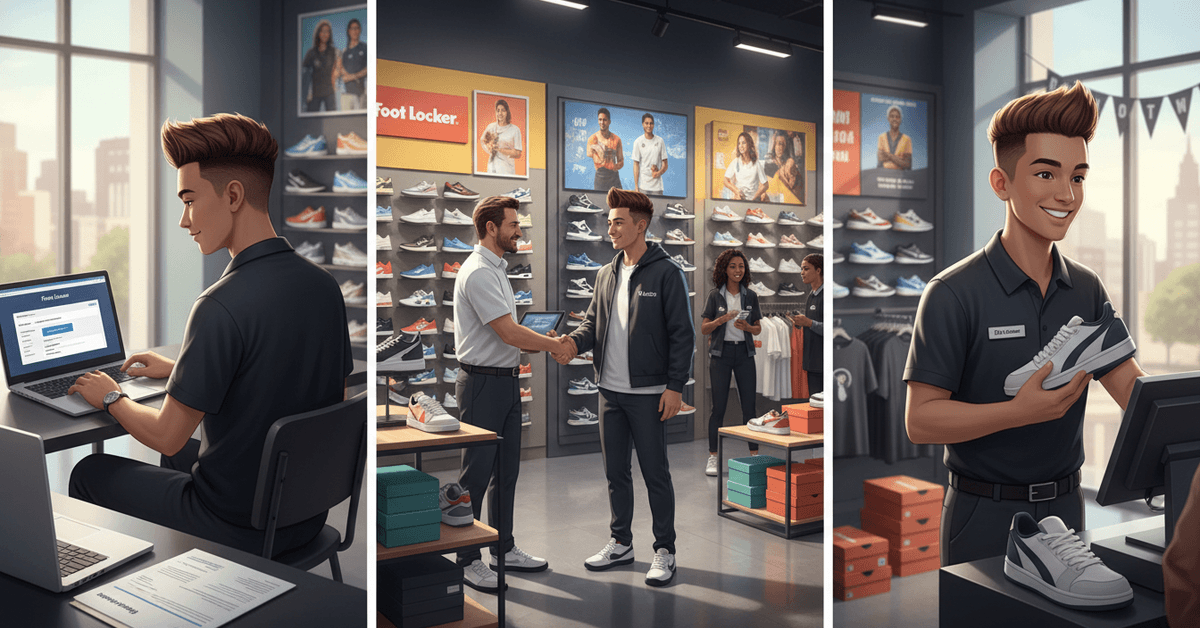
Some interviewers ask about your favorite sneaker brands. Others walk you through a tricky customer scenario.
The variation is wide, so the best prep is thinking through a few situations from any job, volunteer role, or team sport where you solved a problem under pressure.
Step 4: Background Check and Offer
A background check follows a successful interview. Timelines run anywhere from a few days to two weeks depending on the store’s current hiring volume. The wait feels long. It’s normal.
Roles at Foot Locker: Which One Fits You?
| Role | Focus | Best For |
|---|---|---|
| Sales Associate | Customer engagement, sales floor | First-time retail applicants |
| Cashier | Transactions, register accuracy | Detail-oriented candidates |
| Stock Associate | Backroom inventory, floor restocking | Candidates who prefer less floor time |
| Shift Lead | Supervising small teams, opening/closing | People with some prior work experience |
| Assistant/Store Manager | Operations, hiring, performance | Experienced retail professionals |
The sales associate role is where almost everyone starts. A promotion to shift lead can happen within a year for people who show up consistently and build good customer relationships.
What Foot Locker Actually Wants to See
The job postings list skills like communication and teamwork. Those are real, but they’re table stakes. The candidates who move fastest through the process tend to bring something more specific: a real interest in sneaker culture.
Hiring managers notice when an applicant can talk about a recent collab, a limited release, or a brand story without prompting.
That knowledge doesn’t need to be encyclopedic. A basic awareness of what Foot Locker sells and why customers care about it goes a long way.
The traits that actually matter during hiring:
- Flexible schedule availability, especially weekends and holidays
- A customer-first instinct, not just a customer-friendly personality
- Comfort with fast-paced floor traffic during peak hours
- Reliability, which managers assess partly through how you show up to the interview itself
How to Actually Stand Out (Not Just Apply)
I think the resume advice floating around for retail jobs is too generic to be useful. “List your customer service experience.” Okay, but so did every other candidate.
A stronger move: pull exact phrases from the Foot Locker job posting and work them naturally into your resume.
If the listing says “product knowledge,” your resume should mention product knowledge in a real context. Applicant tracking systems scan for this, and so do managers reading fast.
Tailor your bullet points to the role, not the industry. A stock associate application should mention organization and inventory. A sales associate application should mention customer interaction and up-selling.
The Interview Mistake Almost Everyone Makes
Rehearsed answers are easy to spot. Managers at retail stores have heard “I’m a people person” roughly ten thousand times. I genuinely disagree with the common advice to present yourself as always enthusiastic and upbeat.
A candidate who can say “I had a difficult shift once where a customer was genuinely unreasonable, and here’s what I did” is far more interesting than someone who performs positivity. Specificity beats polish every time.
Mention your interest in sneakers if it’s real. If it isn’t, don’t manufacture it. You will get caught the moment a manager asks about a recent Nike drop and you have nothing to say.
What Working at Foot Locker Is Actually Like
The Culture
The team environment at Foot Locker stores is one of the things employees mention most often. Co-workers tend to share genuine enthusiasm for the product, which makes the floor feel different from a generic big-box retail job.
That said, every location runs differently. Some stores have stable teams with low turnover. Others, particularly in high-traffic urban locations, cycle through staff more often. The culture you experience depends heavily on your specific store manager.
Training and Growth
New hires go through hands-on training covering sales techniques, point-of-sale systems, and store operations. The learning curve is short. Within a few weeks, most associates are comfortable on the floor.
Promotions from within happen. They’re not guaranteed, but employees who show consistent reliability and solid customer engagement do move up.
According to retail industry data on Glassdoor, Foot Locker employees rate career opportunities around 3 out of 5, which is average for retail but higher than many discount chains.
Employee Perks Worth Knowing
- Employee discounts up to 30% on store merchandise
- Flexible scheduling, which matters for students
- Access to exclusive product releases and company events
- Advancement pathways into shift lead and management roles
The 30% discount is one of the better perks in retail footwear. If you buy sneakers regularly anyway, it adds up fast.
Age, Documents, and Legal Requirements
Foot Locker hires applicants as young as 16, though some positions or locations require applicants to be at least 18. Minors need a work permit in most regions.
Documents you’ll likely need: proof of age, proof of work eligibility, and depending on your country, a tax form or similar paperwork for payroll setup.
Background checks are routine and cover employment history and disqualifying offenses. The check itself doesn’t take long. Administrative processing on the store’s end is usually where the extra time comes from.
Questions People Ask About Foot Locker Jobs
Q: Do I need retail experience to get hired at Foot Locker? Retail experience helps but is not required for entry-level positions. Sales associate roles are often first jobs. Showing interest in the product and a willingness to learn carries more weight than a prior retail title.
Q: How long does the Foot Locker hiring process take from application to offer? The full process typically runs one to three weeks. The background check phase adds the most time. Some applicants receive offers within a few days of their interview if the store has an urgent need.
Q: Can you get promoted quickly at Foot Locker? Promotions to shift lead or assistant manager are possible within a year for employees who perform well. The pace depends on store size, your manager’s style, and how often openings come up above you.
Q: Does Foot Locker pay more than other retail jobs? Pay rates are competitive with entry-level retail in most regions. The gap between Foot Locker and similar retail employers is usually small. The 30% employee discount is often cited as part of the total compensation picture worth factoring in.
Q: Is the Foot Locker interview formal or casual? Casual, but not unserious. Managers want to see that you can talk comfortably, handle a customer scenario logically, and show up prepared. Dressing in clean, casual athletic wear tends to fit the brand better than showing up in business formal.
Conclusion
A Foot Locker job rewards people who treat it like a real opportunity, not a fallback. The application process is short enough that preparation actually moves the needle.
Go in knowing the brand, knowing the role, and knowing what you’d do when a customer is unhappy. Those three things separate the callbacks from the silence.