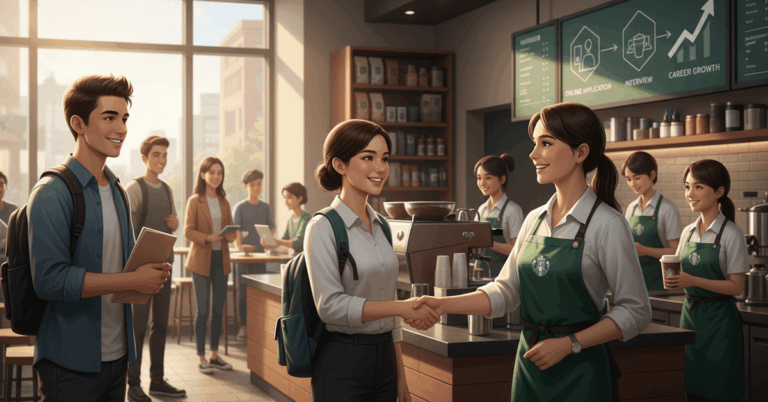
Starbucks gets thousands of applications every week. The barista role is one of the most applied-for entry-level jobs globally, and that number keeps climbing.
This guide is for first-time job seekers, students looking for flexible part-time income, and anyone switching careers who wants a structured, benefit-rich employer without needing years of coffee experience.
One thing worth saying upfront: coffee knowledge is almost never the deciding factor. Starbucks trains you. What they screen for runs deeper than that.
Why Starbucks Is Still Worth Applying to in 2026
The competition is real. But so are the reasons people keep applying.
Even entry-level baristas get access to healthcare options, free food and drinks during shifts, and partner discounts.
The Starbucks College Achievement Plan in the US covers tuition for eligible employees pursuing a degree through Arizona State University’s online program. That is a benefit most coffee chains simply do not offer.
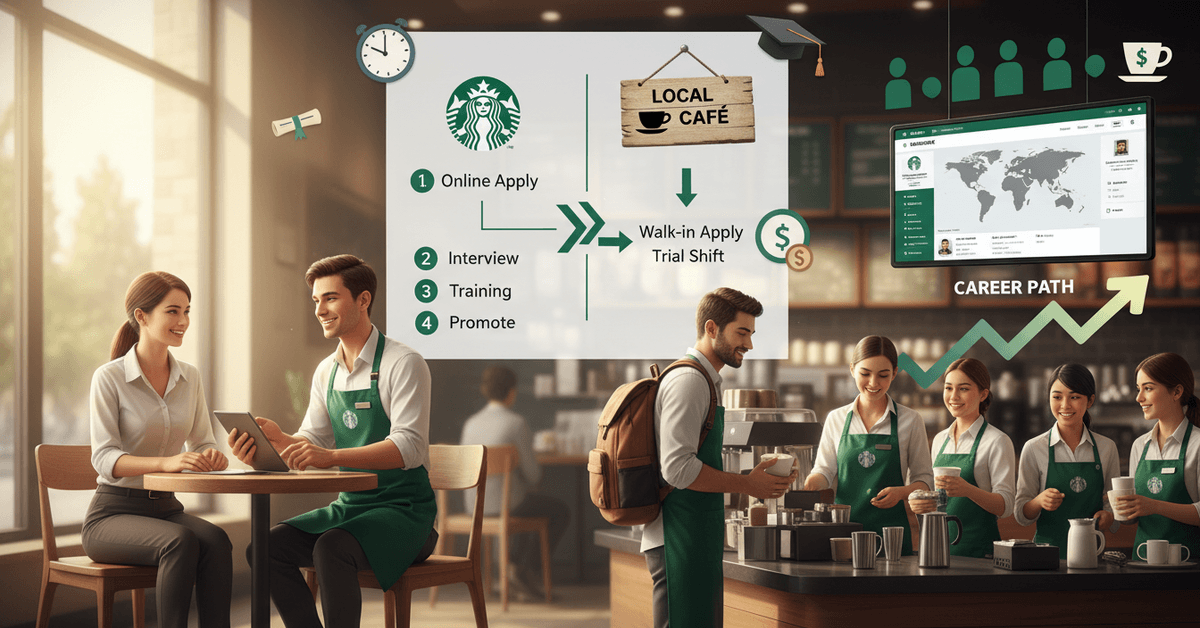
Scheduling flexibility is another draw. Starbucks is structured enough that shift swaps and variable hours are built into the system, which matters a lot if you are a student, a parent, or someone running a side gig simultaneously.
I think the healthcare access for part-time workers is the most underrated benefit in this category. A 20-hour-a-week job that includes medical options is rare, and Starbucks has maintained that for eligible employees across multiple markets.
Check the official Starbucks Careers page to confirm what is currently available in your region, since benefits do shift by country and contract type.
What Benefits Actually Look Like
- Flexible scheduling designed around students, parents, and people with secondary income
- Healthcare and insurance options for eligible part-time employees
- Free drinks, food items, and partner discounts
- Career development through the Starbucks College Achievement Plan (US)
- Pathways to promotion without needing an external degree or certificate
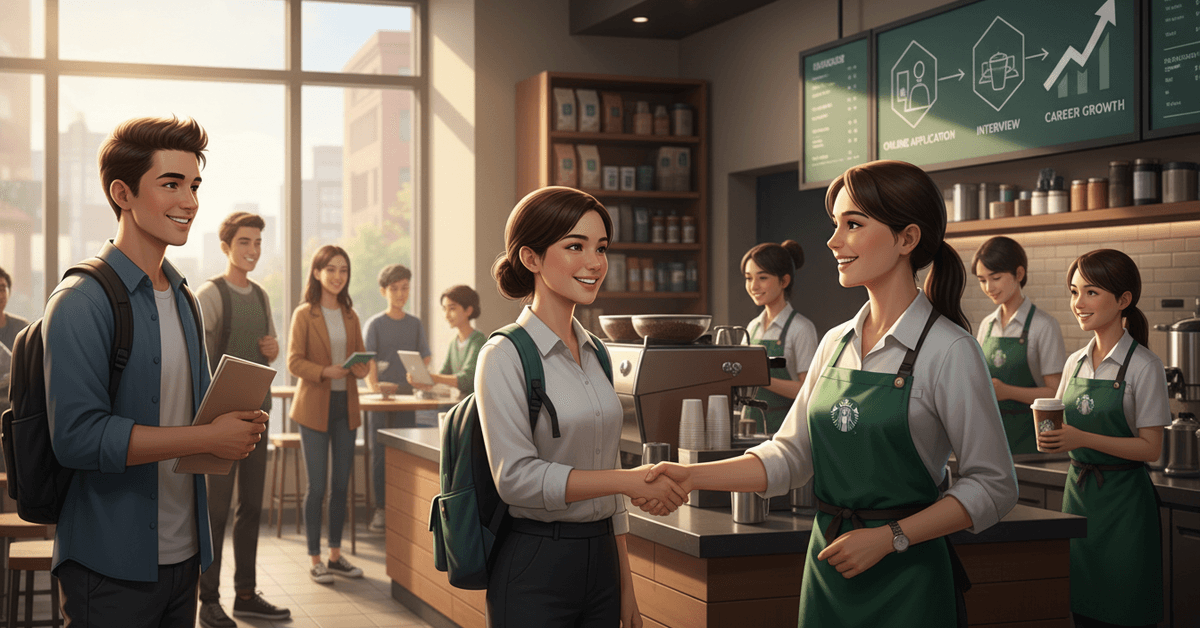
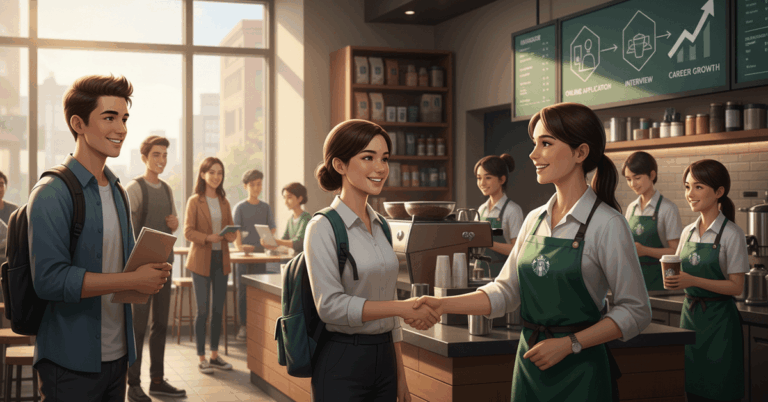
The Starbucks Hiring Process, Step by Step
The process is predictable once you know the shape of it. No surprises.
| Stage | What Happens |
|---|---|
| Online Application | Submitted through the official site or in-store kiosks |
| Screening | Brief availability check, sometimes a short temperament assessment |
| First Interview | In-store with a shift supervisor or store manager |
| Second Interview | Optional, depends on location and role |
| Offer and Onboarding | Document checks, training schedule, and setup |
The online application is the faster route. Some stores accept walk-ins, but the official site lets you save your profile and apply to multiple locations. That flexibility matters if you are open to a few different stores in your area.
The screening stage sometimes includes a short written assessment. It checks for availability conflicts and basic teamwork orientation. There is no trick to it. Answer honestly about your availability.
The First Interview Is Friendlier Than You Think
Starbucks interviews are conversational by design. The questions center on customer scenarios, how you handle pressure, and how you work with a team.
Common questions you can expect:
- Describe a time you helped someone who was frustrated or upset
- What would you do if you made a mistake on a drink order?
- How do you manage multiple tasks when everything is busy at once?
- What does good customer service mean to you, specifically?
No one expects textbook answers. The manager is watching for composure, communication, and whether you seem like someone who shows up reliably.
Dress business-casual. Clean clothes, no strong fragrance. Bring a few questions to ask at the end. One recent hire mentioned that bringing a notepad signaled genuine interest to the interviewer.
What Starbucks Is Really Screening For
I genuinely disagree with the advice that tells candidates to “study the menu” before a Starbucks interview. Starbucks provides weeks of product training after hiring. Showing up able to name twelve seasonal drinks does nothing for your chances.
What the hiring team actually wants to see is behavioral reliability: can you show up on time, stay calm when three people are shouting orders, and handle a correction without shutting down?
The qualities that get people hired are not glamorous:
- Comfortably working fast without cutting corners on accuracy
- Communication that stays steady under pressure
- A willingness to ask for help when something is unclear
- Attention to detail on orders and food safety
- A customer-first reflex, not just a customer-service script
Prior coffee experience is rarely required. Starbucks states this openly. If your background is retail, hospitality, or even just consistent volunteer work, that applies here.
Do You Need Any Certifications?
Depending on your location, a food handler permit may be required before your start date. Some US states mandate it.
A few countries have similar requirements. Check your local labor or health department guidelines before your interview so you are not caught off guard.
Age minimums sit at 16 in many markets, sometimes 15 for certain roles. Bring your right-to-work documents to your interview. Do not wait for them to ask.
How to Make Your Application Stand Out
Applications that look like they were written for any coffee shop get treated that way.
Customize your application language to reflect Starbucks specifically. Reference the brand’s training structure, the team environment, or the advancement pathway. Generic “I love coffee” energy does not move your file forward.
A few things that consistently improve outcomes:
- Mention specific availability blocks, not just “flexible.” Managers fill shifts, so specificity helps
- Reference any experience involving teamwork under time pressure, regardless of industry
- Highlight consistency: same job for two or more years, volunteer commitments, regular extracurriculars
- Follow up after one week if you have not heard back. A short, direct email works
Repeated applications are fine. Some candidates apply twice or three times before getting called. A rejection is not permanent.
Advancement Paths After You Get In
A lot of people take the barista role as a short-term job and leave money on the table. Starbucks promotes internally, often faster than people expect.
| Role | What It Involves |
|---|---|
| Barista | Drinks, guest service, store upkeep |
| Shift Supervisor | Leads the team during a shift, handles operations |
| Assistant Store Manager | Supports the store manager, runs daily logistics |
| Store Manager | Full oversight: staffing, reporting, performance |
Expressing interest in growth early is not aggressive. It tends to be appreciated. Managers notice people who ask about training programs and take on extra responsibilities without being asked.
The Starbucks international careers portal lists corporate and support roles alongside store positions, if you eventually want to move off the floor entirely.
Questions People Ask About Getting Hired at Starbucks
Q: Does Starbucks hire people with no work experience? Character often outweighs resume length here. If you can show reliability, communication, and a calm attitude in an interview, many locations will hire without prior job history. Volunteering and school activities count.
Q: How long does the Starbucks hiring process take? Timeline varies by location and season. Some candidates move from application to offer in under two weeks. Others wait four to six weeks, especially during slower hiring periods. Following up after one week is completely appropriate.
Q: Can I apply to multiple Starbucks locations at once? Yes. The online portal lets you apply to several stores simultaneously. Applying to three or four nearby locations increases your odds without any penalty.
Q: What happens if I get rejected the first time? Reapplying is encouraged and not held against you. Some managers note that candidates who apply a second time after a gap often come across as more prepared and serious about the role.
Q: Are the benefits available outside the US? Some are, some are not. Healthcare options, tuition support, and specific partner discounts vary by country and contract type. Always check the local Starbucks careers page for region-specific information before your interview.
Conclusion
The Starbucks application process rewards people who treat it like a real job pursuit. Preparation, specificity, and follow-through do more than coffee knowledge ever will.
Apply to multiple locations, customize your materials, and be direct about your availability. The role opens more doors than most people expect.