Subway has more than 37,000 locations globally, and a lot of those stores are quietly hiring right now. If you want a job fast, this is one of the more realistic places to get one.
No degree required. No experience required in many cases. The barrier to entry is genuinely low, which is both good news and something worth thinking clearly about.
The Subway hiring process trips people up not because it’s hard, but because applicants underestimate what store managers actually want. Knowing that gap changes how you apply. This is for anyone who needs a paycheck before the month ends: students, career changers, people re-entering the workforce after a gap.
Subway’s Actual Hiring Process (Not the Polished Version)
Subway positions are posted on the Subway Careers site, on Indeed, and sometimes on a paper sheet taped to the store window. All three paths work.
Applications ask about your availability, any previous work history, and sometimes a few scenario questions about customer situations. The scenarios are not trick questions. They want to see that you will not panic during a lunch rush.
What Roles Are Actually Available
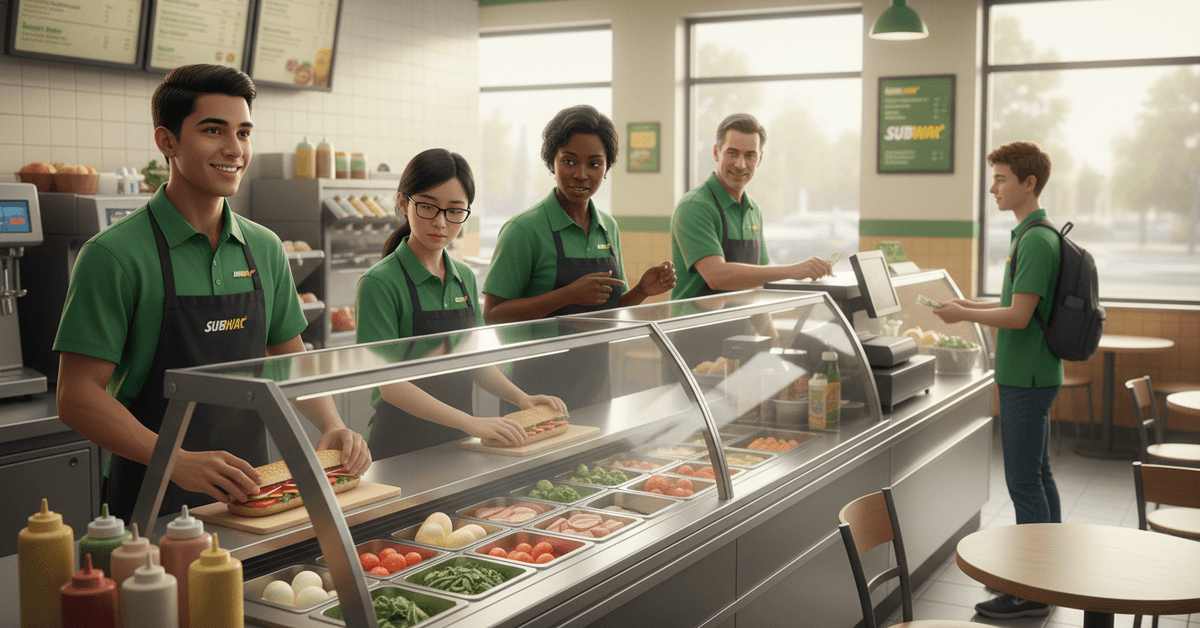
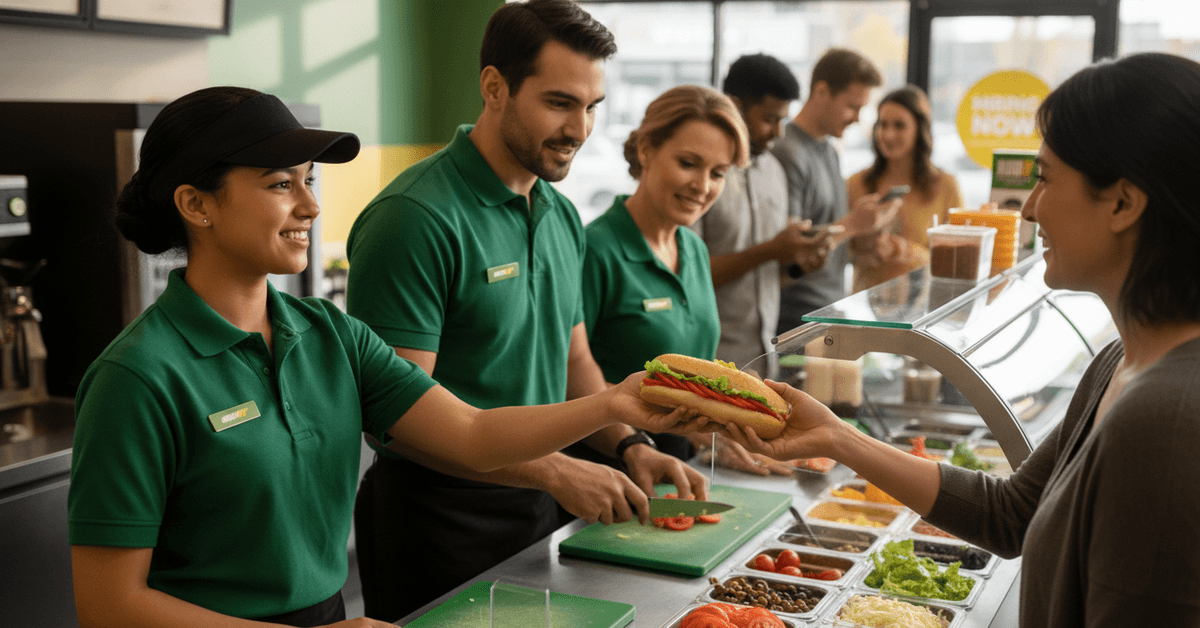
Most applicants start as a Sandwich Artist. That is the frontline role: making orders, handling cash, keeping the prep area clean.
The other roles are:
- Shift Leader (supervising a shift, usually after internal promotion)
- Store Manager (sometimes hired externally, but rarely for someone with zero food service background)
- Cleaning or Maintenance Staff (less common, location-dependent)
If you want the Shift Leader or Manager track eventually, say so during the interview. Store managers notice when applicants are thinking past day one.
Paper vs. Online Applications
Paper applications still exist at some older franchise locations, but they’re rare now. Online is the default. Fill it out completely. Leaving fields blank reads as carelessness, not efficiency.
What Actually Makes a Subway Application Stand Out
I think applicants overthink the resume and underthink the availability section.
Store managers have told interviewees directly that someone willing to cover a 6am Saturday shift is worth more than a candidate with food service experience who can only work Tuesday and Thursday afternoons.
Availability is your strongest card. State it clearly and specifically.
A few things worth including even if you think they’re obvious:
- Any customer-facing role you’ve held, including retail, tutoring, or babysitting
- School or volunteer work that shows reliability and punctuality
- A direct line about your preferred schedule and what you can cover
Subway franchises are small operations. They need people who show up. That is the job description underneath the job description.
Do You Actually Need a Resume?
I would include one even if it is one page. A resume, when no one else submits one, is free differentiation. It does not need to be elaborate. Three sections: contact info, work or volunteer history, and a line about availability. Done.
The Subway Interview: What 15 to 30 Minutes Actually Looks Like
Store managers run these interviews, sometimes in the dining area during a slow period. Do not expect a formal room or a panel. Expect a conversational check to see if you seem like someone they can train.
Questions You Will Almost Certainly Hear
- Why do you want to work here?
- Describe a time you dealt with a difficult person
- How would you handle a rush of customers all at once?
- Are you comfortable handling cash and working around food?
Rehearse your answers once, then forget the script. Scripted answers in a fast food interview sound strange. Practical, short answers work better: “I stayed calm, finished what was in front of me, asked for help when I needed it.”
What to Wear
Business casual. Clean clothes, tidy hair, closed-toe shoes if possible. The interview is partly an assessment of whether you look like someone who can stand in front of customers. Overdressing is fine. Showing up in athleisure is not.
Pay Ranges and What Affects Your Rate
Pay varies by location type (franchise vs. corporate), city minimum wage laws, and position. A Sandwich Artist in a high-minimum-wage state earns more than the national floor.
| Position | Average US Hourly Rate |
|---|---|
| Sandwich Artist | $9 to $13 |
| Shift Leader | $12 to $16 |
| Store Manager | $15 to $20 |
Rates in cities like Seattle, San Francisco, or New York can run above these ranges due to local wage laws.
The table is a starting point. Check your state’s Department of Labor site for the legal minimum in your area before accepting any offer below it.
Age and Documentation Requirements
Subway hires at 16 in most US locations. Some states require parental consent forms for workers under 18. You will need a valid ID and proof of work eligibility. Background checks depend on the franchise owner’s preference, not a company-wide policy.
Schedules, Flexibility, and What the First Month Is Like
Subway’s scheduling is genuinely one of its practical advantages for students or people balancing other work. Early morning, midday, and evening shifts exist at most locations. Some stores run late into the night depending on foot traffic.
The first few weeks are training. Food safety, order prep, cash handling, and cleaning protocols are all covered. An experienced team member usually walks new hires through the routine.
A few things that trip people up early:
- Food safety rules are non-negotiable. Gloves, temperature checks, expiration labels. Learn these fast.
- Lateness in small teams creates real problems. A crew of three people cannot absorb a no-show the way a large restaurant can.
- Ask questions. Managers in small stores prefer a question over a mistake.
I think the one genuine underrated skill in a Subway role is speed during prep. Customers notice a slow line within about 90 seconds. Getting efficient at build order is worth practicing in the first two weeks, not the first two months.
One Opinion That Goes Against the Standard Advice
The standard advice for fast food applications is to emphasize your passion for customer service. Every career site says this. I disagree with it specifically for Subway applications.
Store managers I have read feedback from are not looking for someone who lights up at the idea of making sandwiches.
They are looking for someone dependable, coachable, and able to stay calm at 12:15pm on a Tuesday when there are eleven people in line. Lead with reliability. Leave the passion language out entirely.
Questions People Ask About Subway Jobs
Q: Can I apply at multiple Subway locations at the same time? Subway locations are largely franchised, meaning each store has its own owner and hiring process. Applying to several nearby locations at once is completely fine and often smart if you need work quickly.
Q: Does Subway do background checks? It depends on the franchise owner. Some do, some don’t. Subway corporate does not mandate a universal background check policy, so your experience will vary by location.
Q: How long does it take to hear back after applying? Some stores respond within 48 hours. Others take a week or more. If you applied online and haven’t heard anything after five days, walking into the store and asking for the manager is a reasonable follow-up move.
Q: Is there room to move up, or is Sandwich Artist a dead end? Shift Leader and Store Manager positions at most locations are filled internally first. If you are reliable and show interest in more responsibility, those conversations happen faster than most people expect, sometimes within three to six months.
Q: What if I have no work experience at all? List anything that required you to show up on time and interact with people. School clubs, volunteer work, babysitting. The hiring bar for entry-level Subway roles is genuinely low. Availability and attitude carry more weight than a work history.
Conclusion
Getting a Subway job in 2026 takes less time than people assume if you apply smart. Availability, reliability, and one clear follow-up conversation are what move most applicants from application to offer.
The skills you pick up in the first ninety days carry further than the role itself implies. Start at one location, do the job well, and see where the next six months actually take you.